A lot of real estate investors eventually hit the same wall.
They get tired of:
- tenant calls
- repair bills
- late-night maintenance issues
- eviction problems
- contractors disappearing
- trashed rentals
And honestly?
Even profitable rental properties can become mentally exhausting after a while.
That’s why more investors throughout Virginia have started exploring something completely different:
real estate notes.
Because note investing offers something many landlords eventually crave badly:
cash flow WITHOUT directly managing the property itself.
No fixing leaking roofs.
No chasing contractors.
No midnight plumbing emergencies.
Instead, investors focus on the financing side of real estate.
And once people start learning about notes, one big question usually follows quickly:
“Where do investors actually FIND good real estate notes?”
The answer is:
there are several places…
but not all note sources are equal.
And honestly, newer investors need to be careful because note investing sounds simpler online than it actually is in real life.
First — What A Real Estate Note Actually Is
Before talking about where to buy them, it helps understanding what notes actually are.
A real estate note is basically the debt attached to a property.
Instead of owning the house directly…
you own the loan agreement tied to that property.
Meaning:
the borrower makes monthly payments to YOU.
That’s why many investors like note investing:
- recurring income
- less physical management
- fewer tenant headaches
- passive cash flow potential
At least compared to traditional rentals.
Now obviously, notes still involve risk.
But many investors prefer managing paperwork and payments over managing tenants and toilets.
Why Investors In Virginia Are Paying More Attention To Notes
The market changed heavily over the last few years.
Rental ownership became more expensive because of:
- rising insurance
- maintenance inflation
- contractor shortages
- higher taxes
- increasing tenant issues
At the same time, some investors started looking for ways to:
- reduce stress
- simplify portfolios
- diversify income streams
And that’s exactly why note investing gained popularity again.
Especially among investors who still WANT real estate exposure…
without actively managing physical properties daily.
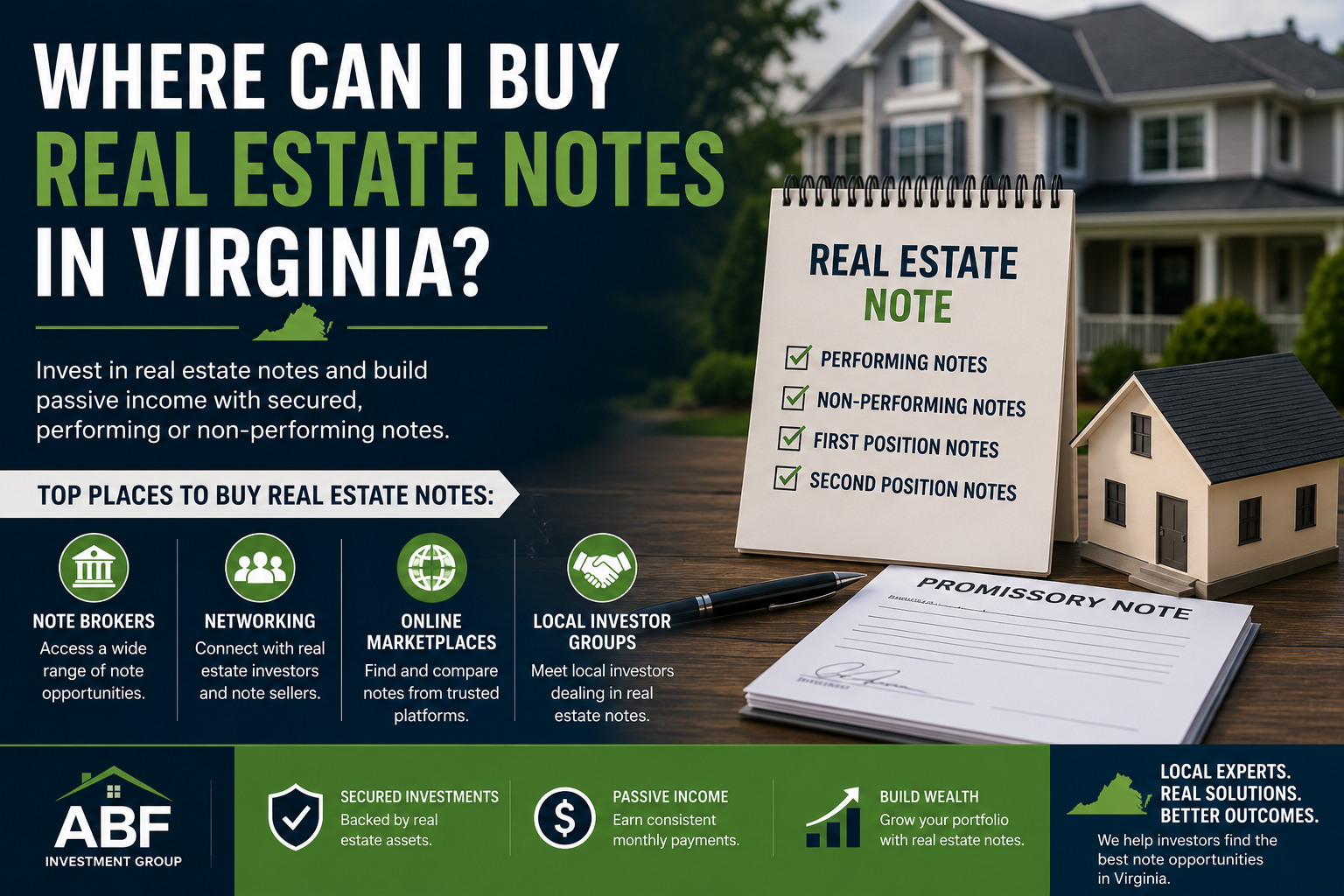
1. Buying Notes Directly From Banks Or Lenders
This is one of the oldest ways investors acquire notes.
Banks and mortgage lenders sometimes sell notes because:
- they want liquidity
- they’re reducing risk exposure
- they’re clearing distressed assets
- they no longer want certain loans on their books
This can include:
- performing notes
- non-performing notes
- distressed mortgages
Now honestly?
This path can become complicated fast.
Because large institutions typically prefer working with:
- experienced investors
- established buyers
- trusted relationships
Meaning newer investors often struggle getting direct access initially.
A lot of these deals happen quietly through networking and long-term industry relationships rather than public advertising.
Relationship Building Matters A LOT In The Note World
This surprises beginners.
People assume note investing works like scrolling Zillow listings online.
Not really.
The note world remains heavily relationship-driven.
Many opportunities move privately through:
- brokers
- hedge funds
- lending contacts
- investor networks
- institutional relationships
That’s why experienced note investors spend years building industry connections.
2. Buying Notes Online
This is where many newer investors start looking first.
There are websites where notes occasionally appear for sale publicly.
Some investors even find opportunities through:
- investor marketplaces
- auction platforms
- classified sites
- online note exchanges
But honestly?
This is also where inexperienced investors can get themselves into trouble quickly.
Because not every online note opportunity is actually good.
Some notes may involve:
- weak collateral
- title problems
- low equity
- unreliable borrowers
- legal complications
And unfortunately, flashy online listings sometimes make distressed notes look safer than they really are.
That’s why serious due diligence matters heavily before purchasing anything.
Cheap Notes Aren’t Always Good Notes
This is one mistake beginners make constantly.
People see discounted notes and immediately think:
“Wow, huge opportunity.”
But discounted pricing often reflects underlying problems.
For example:
- non-paying borrowers
- legal issues
- poor property condition
- bad neighborhoods
- lien complications
Experienced investors know:
sometimes the cheapest note becomes the MOST expensive mistake later.
3. Working With A Note Broker
Honestly, this is where many investors eventually end up.
A good note broker can simplify the process dramatically because they already have:
- industry relationships
- access to inventory
- underwriting experience
- deal flow connections
Instead of randomly searching online hoping something works out, investors can explain:
- their goals
- risk tolerance
- preferred returns
- investment strategy
and brokers help match opportunities accordingly.
Especially for newer investors, this guidance often prevents expensive mistakes.
Why Experienced Guidance Matters In Note Investing
This part honestly cannot be overstated.
Real estate notes involve layers many people underestimate:
- title review
- borrower analysis
- lien positions
- collateral evaluation
- legal structure
- payment history
- foreclosure risk
A note may LOOK profitable initially…
until deeper research reveals major problems.
That’s why experienced investors usually review:
- payment performance
- property condition
- local market strength
- equity protection
before purchasing anything.
Performing Notes vs Non-Performing Notes
This becomes another major decision.
Performing Notes
These involve borrowers making payments consistently.
Investors often prefer them because:
- cash flow feels stable
- risk appears lower
- income starts immediately
Non-Performing Notes
These involve borrowers who stopped paying.
Now obviously, that sounds riskier…
because it is.
But distressed notes sometimes create opportunities for:
- discounted purchases
- loan restructuring
- foreclosure recovery
- larger potential returns
Higher risk…
but potentially higher upside too.
Virginia Markets Still Matter In Note Investing
Even though note investors focus on financing instead of direct ownership, the property location still matters heavily.
A note secured by property in strong Virginia markets generally feels safer than one tied to declining areas.
That’s why investors still analyze:
- neighborhood trends
- property values
- local demand
- economic stability
- appreciation potential
before purchasing notes.
Because ultimately:
the property still backs the debt.
Why Some Investors Prefer Notes Over Rentals
Honestly?
A lot of it comes down to lifestyle.
Some investors simply get burned out dealing with:
- maintenance calls
- tenants
- property damage
- management headaches
And notes can sometimes provide:
- income
- real estate exposure
- portfolio diversification
without requiring daily property involvement.
Now obviously, note investing still requires education and risk management.
But many experienced investors appreciate the reduced operational stress.
Final Thoughts
Real estate notes can absolutely become a powerful investment strategy for Virginia investors looking to generate cash flow without directly managing rental properties.
But finding GOOD notes requires much more than randomly buying whatever appears online.
Smart investors focus on:
- due diligence
- relationship building
- understanding risk
- working with experienced professionals
before investing serious money.
Whether notes come from:
- banks
- online marketplaces
- brokers
- institutional contacts
the key is understanding what you’re actually buying underneath the surface.
At ABF Investment Group, we believe investors deserve honest education about note investing — not unrealistic hype or “easy passive income” promises.
No fake guru talk.
No shortcuts.
Just practical insight into how experienced investors approach real estate notes in today’s Virginia market.