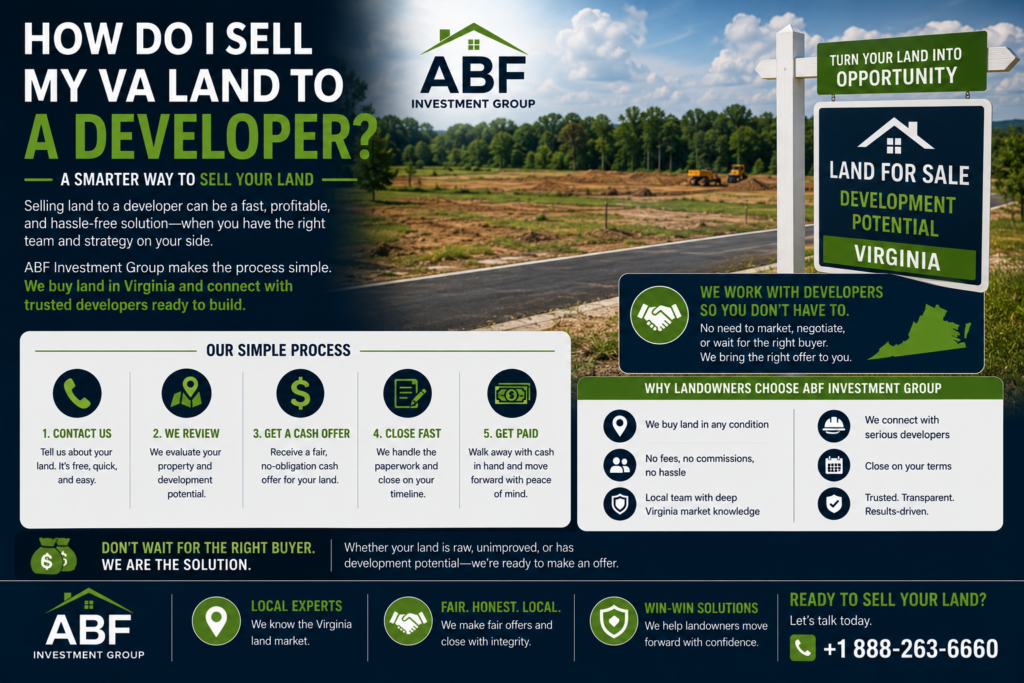
How Do I Sell My Virginia Land To A Developer? What Landowners Need To Know
Owning vacant land in Virginia can feel simple for years.
Unlike houses, raw land usually doesn’t require:
daily maintenance
tenant management
repairs
constant upkeep
or expensive remodeling.
In many cases, landowners simply hold onto property quietly while:
taxes get paid
values slowly change
and future possibilities remain open.
But eventually, many landowners start asking:
“How do I actually SELL this land?”
And honestly?
Selling vacant land is VERY different from selling a house.
Especially when trying to attract:
developers
builders
commercial buyers
or land investors.
Because land buyers think completely differently compared to residential homebuyers.
Developers evaluate land based on:
future potential
infrastructure
zoning
utility access
growth patterns
and profitability.
That means understanding how developers think can dramatically improve your chances of selling land successfully in Virginia.
Selling Land Is Usually Harder Than Selling A House
This surprises many property owners.
Homes naturally appeal to:
families
first-time buyers
investors
retirees
and relocation buyers.
But vacant land attracts a much smaller buyer pool.
And developers are extremely selective because land development often involves:
large investments
permits
engineering
utility work
legal approvals
and significant financial risk.
That’s why landowners should understand what developers actually care about before trying to market raw land.
First — Developers Care Heavily About Infrastructure
This becomes one of the MOST important factors.
Developers want land where future projects can realistically function.
That means they evaluate nearby access to:
roads
electricity
water
sewer systems
internet
drainage
and utilities.
Because eventually, future buyers or tenants will expect modern infrastructure connections.
Utility Access Strongly Affects Development Costs
Even if utilities are NOT already installed directly on the property, developers still want to know:
how far away services are
whether expansion is realistic
and what connection costs may look like.
For example:
land located near expanding infrastructure may become far more attractive than isolated rural acreage with no nearby utility access.
Because infrastructure installation can become extremely expensive very quickly.
Road Access Matters More Than Many Owners Realize
Developers also care heavily about:
accessibility
traffic flow
transportation routes
and visibility.
Land with poor access may require:
easements
roadway improvements
or government approvals
before development becomes feasible.
Even simple things like:
highway proximity
nearby intersections
and neighborhood connectivity
can influence development interest significantly.
Zoning Is One Of The Biggest Factors Developers Analyze
This is HUGE.
Before developers buy land, they want to understand:
what can legally be built there.
Zoning determines:
residential use
commercial use
density limits
building restrictions
subdivision possibilities
and permitted development types.
Developers Prefer Fewer Legal Obstacles
Now obviously, zoning changes CAN happen.
But rezoning creates:
delays
hearings
uncertainty
political challenges
engineering costs
and additional risk.
That’s why developers usually prefer properties already aligned with their intended use whenever possible.
Meaning if your land already fits:
residential development
mixed-use
commercial
or agricultural transition areas
that may increase developer interest significantly.
Many Landowners Don’t Actually Know Their Zoning
And honestly?
That’s common.
A lot of owners inherited land or purchased it years ago without studying zoning regulations deeply.
But before marketing land to developers, it’s smart to research:
current zoning classification
future land-use maps
nearby developments
and city growth plans.
That information helps developers evaluate opportunities much faster.
Developers Think Long-Term — Not Just About Today
This part matters enormously.
Developers don’t only evaluate what exists currently.
They think about:
what the area may look like years into the future.
That means they study:
population growth
commercial expansion
infrastructure projects
new subdivisions
school development
retail growth
and municipal planning.
The “Path Of Growth” Matters Heavily
If cities or suburbs are actively expanding toward your property, developers often pay closer attention.
For example:
if new neighborhoods, shopping centers, or highways are moving steadily toward your land,
future development potential may increase significantly.
Even rural land can become highly valuable when located in future expansion corridors.
Not All Real Estate Agents Specialize In Land Sales
This is important.
Many residential real estate agents primarily focus on:
single-family homes
condos
But selling land to developers requires completely different expertise.
Because land sales involve:
zoning analysis
surveying
entitlement issues
infrastructure evaluation
and development feasibility.
Specialized Land Knowledge Makes A Big Difference
Developers often ask highly technical questions involving:
utility easements
topography
environmental concerns
subdivision potential
flood zones
access rights
and municipal regulations.
Meaning sellers often benefit from working with professionals experienced specifically in:
land transactions
development discussions
and investor negotiations.
Some Landowners Prefer Selling Directly Instead
Traditional listings aren’t always ideal for vacant land.
Because vacant land sometimes sits on the market:
for months
or even years
without attracting serious qualified buyers.
That’s why many landowners eventually explore direct sales to:
land investors
developers
or professional buyers.
Why Vacant Land Can Be Emotionally Frustrating To Sell
Unlike homes, raw land often lacks:
emotional buyer appeal
move-in excitement
staging opportunities
or visual warmth.
Buyers must imagine:
future construction
future neighborhoods
future projects
or future investment potential.
That makes marketing land significantly harder than marketing houses.
Raw Land Buyers Analyze Numbers Aggressively
Developers evaluate land primarily through:
profitability
cost projections
timelines
and future return potential.
Meaning they calculate:
utility installation costs
permit expenses
construction feasibility
market demand
engineering requirements
and development risk.
This creates much more analytical negotiations compared to emotional homebuyers.
Environmental Factors Matter Too
Depending on the property, developers may evaluate:
wetlands
flood zones
soil conditions
protected land
environmental restrictions
drainage concerns
and topography.
These factors can significantly affect:
development costs
timelines
and project feasibility.
Timing Can Influence Land Value Significantly
Land values often change based on:
market demand
city growth
infrastructure expansion
interest rates
and local development activity.
Sometimes waiting increases value dramatically.
Other times market slowdowns reduce demand temporarily.
That’s why local market knowledge matters heavily when deciding:
when to sell land.
Why Some Virginia Landowners Work With Professional Buyers
At ABF Investment Group, we work with landowners who often want:
straightforward transactions
realistic offers
fast closings
and less hassle.
Especially when owners no longer want to:
maintain the property
pay taxes indefinitely
market land for months
or negotiate with multiple uncertain buyers.
Selling Land “As-Is” Can Simplify The Process
One major advantage of direct land sales is simplicity.
Many landowners prefer avoiding:
extensive marketing
endless waiting
zoning confusion
and uncertain negotiations.
Instead, they want:
clarity
speed
and predictable solutions.
Every Parcel Has Different Potential
This matters heavily.
Some properties work best for:
residential development.
Others fit:
commercial projects
agricultural use
investment holding
or recreational purposes.
That’s why understanding the property’s:
location
zoning
infrastructure access
and growth potential
is so important before selling.
Final Thoughts
Selling land to a developer in Virginia is completely different from selling a traditional home.
Developers focus heavily on:
infrastructure
zoning
utility access
growth patterns
and long-term profitability.
Understanding how developers evaluate land helps sellers:
market more effectively
negotiate more confidently
and identify realistic opportunities.
At ABF Investment Group, we understand that selling raw land can feel confusing and frustrating for many property owners.
That’s why we focus on providing:
straightforward communication
honest evaluations
transparent processes
and practical land-buying solutions throughout Virginia.
No complicated pressure tactics.
No unrealistic promises.
No confusing real estate jargon.
Just simple, practical help for Virginia landowners ready to move forward confidently.